Building technology is what we sell. Policy change is what we make.
Our work has changed Maharashtra's solar rules and India's green building standard. Here is the recognition, in plain words.
Maharashtra rewrote its rooftop solar rules. The regulator quoted us.
MERC (Maharashtra's electricity regulator) writes the rules for rooftop solar in the state. In 2024 it introduced Virtual Net Metering, a billing system that lets the flats in one building share credit for solar power made on their common roof. Protostar wrote to MERC during the public consultation and proposed something simpler. Let hardware inside the building divide the solar power itself, so the DISCOM (the electricity distribution company) only ever reads one meter.
When MERC published its final decision, it described our proposal by name in its Statement of Reasons, the official document that explains why the rules changed.
“Protostar submitted that when multiple consumers wish to participate under Virtual Net Metering... Protostar has suggested hardware-based approach. It has proposed to consider allowing the energy settlement at a common net meter for the entire building. The distribution of electricity can then be allocated to each apartment via Energy Allocation Devices (EAD) / Smart Power Distribution Unit (SPDU). This approach will simplify the billing process for the Distribution Licensee and ensures fair distribution of solar generated power.”
Why hardware beats billing software
One meter for the whole building
The DISCOM bills the building like any other solar customer. The SPDU handles all the sharing inside.
Real power, not a billing credit
Virtual Net Metering adjusts bills after the fact. The SPDU delivers actual solar power to each flat in real time.
Every flat can see its share
Residents watch their own solar consumption live, so there are no shared-ratio disputes to argue over.
Micro-grids are now legal
The same amendment introduced the Grid-Connected Micro-Grid, the framework that recognises an SPDU building as a legal installation.
How the rules changed
We changed how India's green buildings heat their water.
In most Indian homes, heating water is the biggest single power guzzler. A heat pump water heater does the same job with about a third of the electricity, but for years India's green building standard gave builders no reason to install one.
Rahul Rajan, Protostar's founder, took real installation data to the Green Homes Core Committee of the IGBC (India's green building council) and kept making the case until the numbers won.
In Green Homes Version 3.0, heat pumps earned their own credit points in the national standard. Builders across India now score green rating points for choosing them, which nudges every new project towards efficient water heating.
IGBC Green Homes v3 · Energy Efficiency
EE Credit 2: Alternate Water Heating Systems
3 credit points, applicable to all multi-dwelling residential projects. The standard now rewards heat pump water heaters over conventional electric geysers.
The scale this standard touches
Source: IGBC Green Homes Rating System Ver 3.0 · September 2019
What changed on the ground
Heat pumps are now creditable under India's largest residential green rating system
Developers across India earn IGBC credits for specifying heat pump water heaters
Water heating demand drops by up to 67% compared to conventional geysers
Rahul Rajan · Advocate to the IGBC Green Homes Core Committee
Recognised by juries, regulators and business schools
Independent recognition of our work, from India's highest green building rating to a case study taught in business schools.
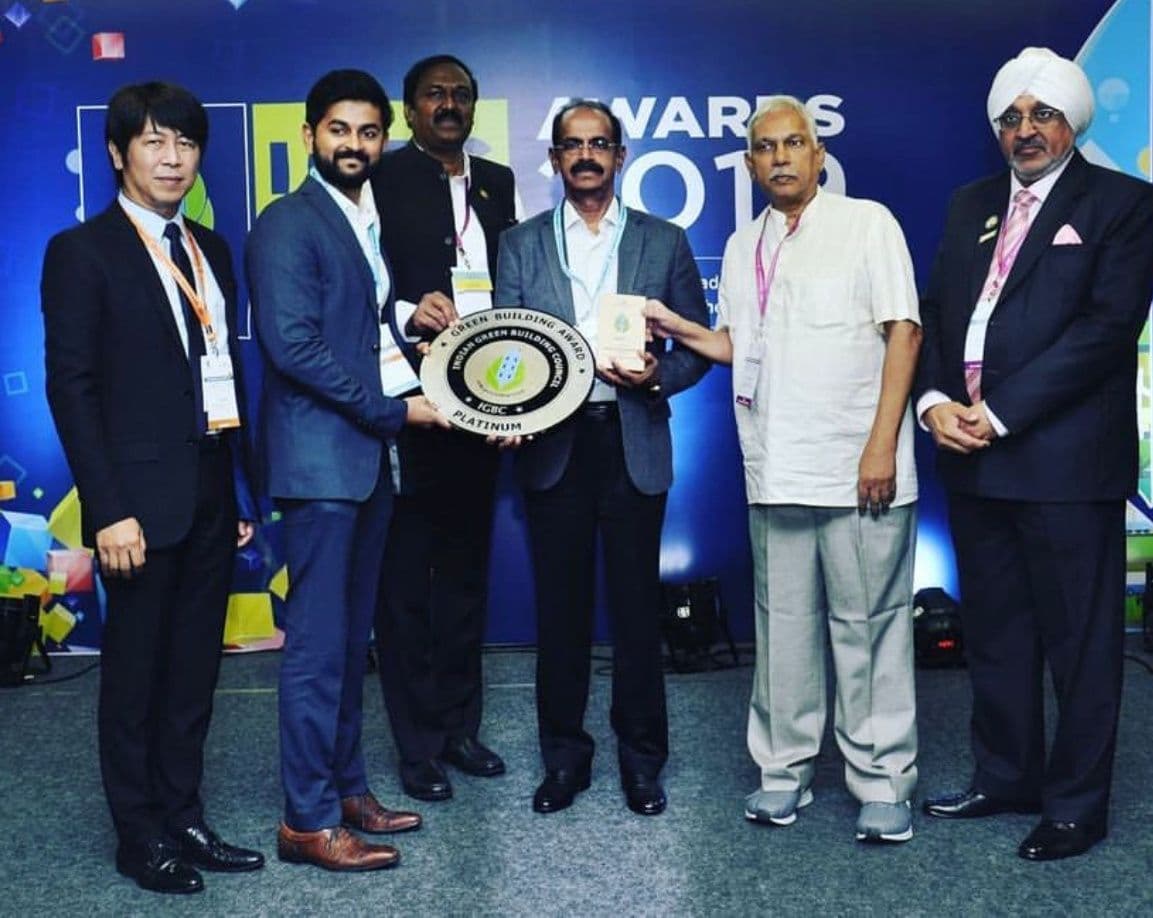
IGBC Platinum
Green building rating
The IGBC (India's green building council) gave our pilot building its highest rating, presented by the IGBC National Core Committee.

Bharat Leadership Award 2021
Presented by the Governor of Maharashtra
Awarded for green entrepreneurship in real estate by the Governor of Maharashtra.
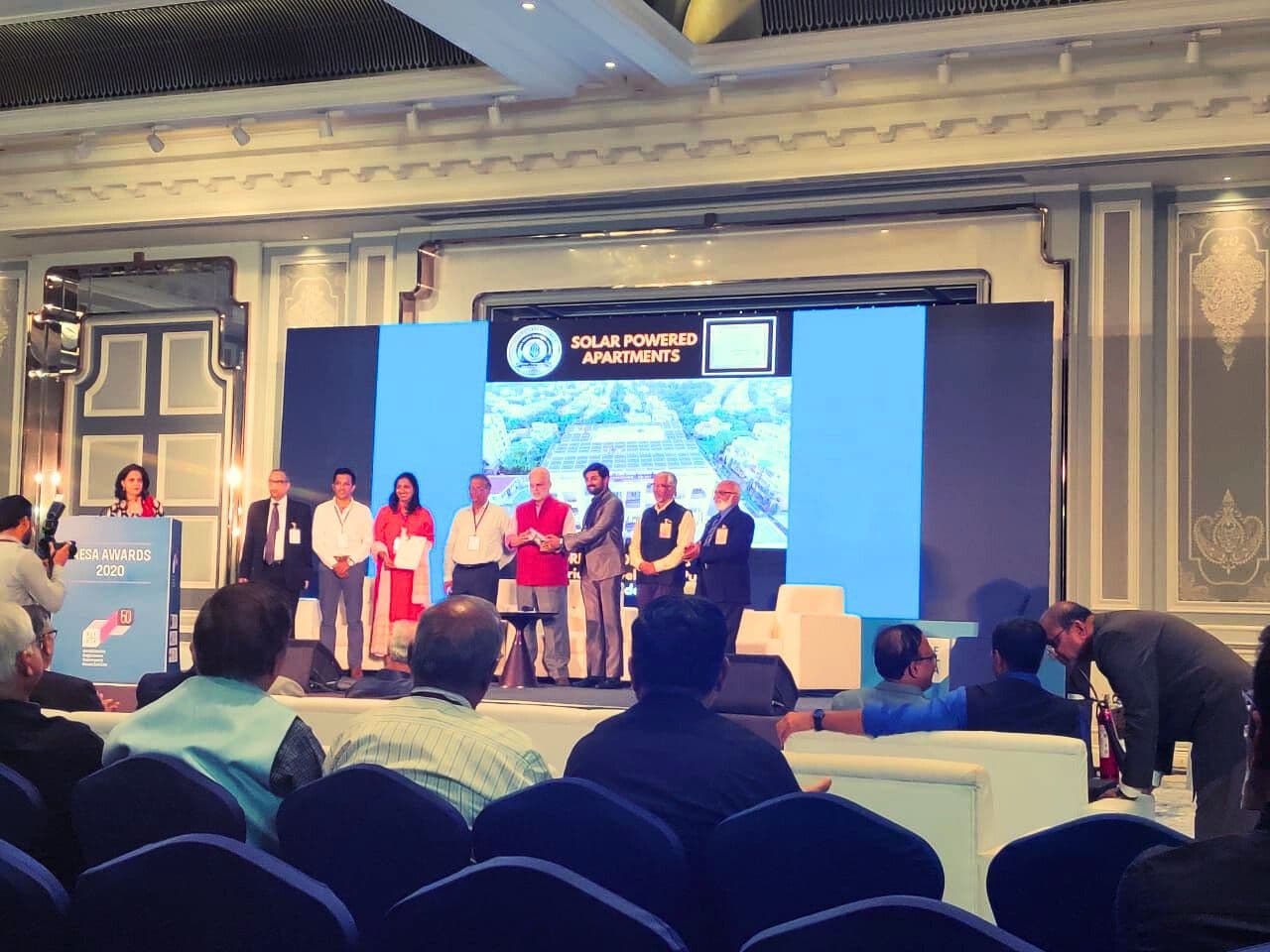
AESA Award 2020
Architects, Engineers & Surveyors Association
Awarded for green initiatives, presented by Shri Pramod Chaudhari, founder of Praj Industries.

Times Real Estate Icons 2020
The Times of India
Named a top environment friendly project in West India.
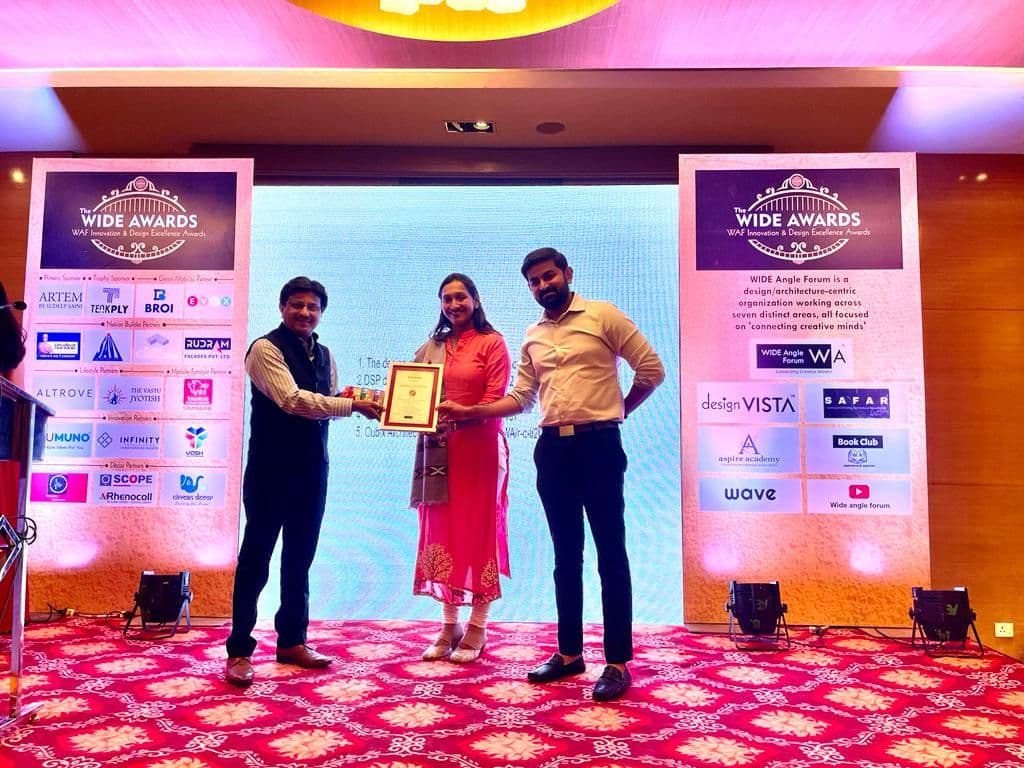
WIDE Angle Forum Award 2022
Industry recognition
Awarded Best Standalone Multi-Element Building for innovation in sustainable buildings.
SUNREF India Selection
Evaluated by CRISIL
Chosen among India's top 11 green affordable housing projects, independently evaluated by CRISIL under the SUNREF programme backed by AFD, the European Union and NHB.
Harvard Business Publishing Case Study
Authored at IIM Bangalore
Protostar's journey is taught as a business school case study. It was written at IIM Bangalore and is distributed worldwide by Harvard Business Publishing, so students far beyond Pune now study how shared rooftop solar works.
One rooftop, three levels of impact
Every SPDU building creates value for the society that owns it, the DISCOM that serves it, and the country around it.
For housing societies
A cooler building
Panels shade the terrace slab, the building's biggest source of heat gain. Top floors stay cooler and air conditioning bills drop.
A longer-lasting roof
Panels shield the waterproofing from harsh sun and monsoon rain, so the roof leaks less and lasts years longer.
A new terrace to use
The shaded deck under elevated panels becomes usable space for the whole society.
40 to 100% of the building's power
Most residential buildings have enough roof area to cover 40 to 100% of their total electricity needs.
For DISCOMs
Deferred grid upgrades
Solar used inside the building never touches the grid, so the DISCOM can put off network upgrades worth crores per substation.
Zero transmission losses
Power made on the roof and used under it loses nothing in transit.
Ready for EV charging
Rooftops make clean power in the daytime, exactly when electric vehicles need to charge.
A steadier grid
Thousands of small rooftop generators mean no single point of failure.
For the nation
Energy security
India is the world's third-largest energy consumer. Rooftop solar cuts dependence on imported fuel.
Farmland stays farmland
Rooftops make power on space cities already have, so fertile land is never covered in panels.
Cleaner air, longer lives
Air pollution caused over 2.3 million premature deaths in India in 2019. Every solar unit displaces coal power.
A bankable path to national targets
India's share of world energy use is set to grow from 6.1% to 9.8% by 2050. Rooftop solar is a scalable way to meet it cleanly.
Distributing the Power of the Sun
Our full impact report goes deeper on everything on this page: passive cooling and waterproofing at society level, grid relief for DISCOMs, and energy security for the nation. It includes primary research citations and quantitative analysis.
One rooftop, three levels of climate contribution
Benefit to societies: cooling, waterproofing, usable space
Benefit to DISCOMs: deferred grid spending, lower losses, EV support
Benefit to the nation: energy security, farmland, air quality
22 peer-reviewed references and citations
Add your building to the story
Every new rooftop adds to the proof that shared solar works. Talk to us about yours.